CANS
CANS is a used shipping container dealer operating in a market defined by buyer uncertainty — where a four-to-five figure purchase can't be properly evaluated until the unit is already on-site. The brand name is derived from "sea cans," the insider term real buyers and industry workers use for shipping containers, instantly signaling credibility and fluency before a single word of copy does its job. Strategy focused on the core risk of buying used: because buyers can't assess quality themselves, trust in the seller becomes the only thing they can actually evaluate. The identity system — color palette, logotype, and logomark — was built to read as serious and established, removing doubt on first impression. A one-page conversion website brought it together, designed with a single objective: move a primed buyer from landing to inquiry with no friction.
Naming, Visual Identity, Web Design
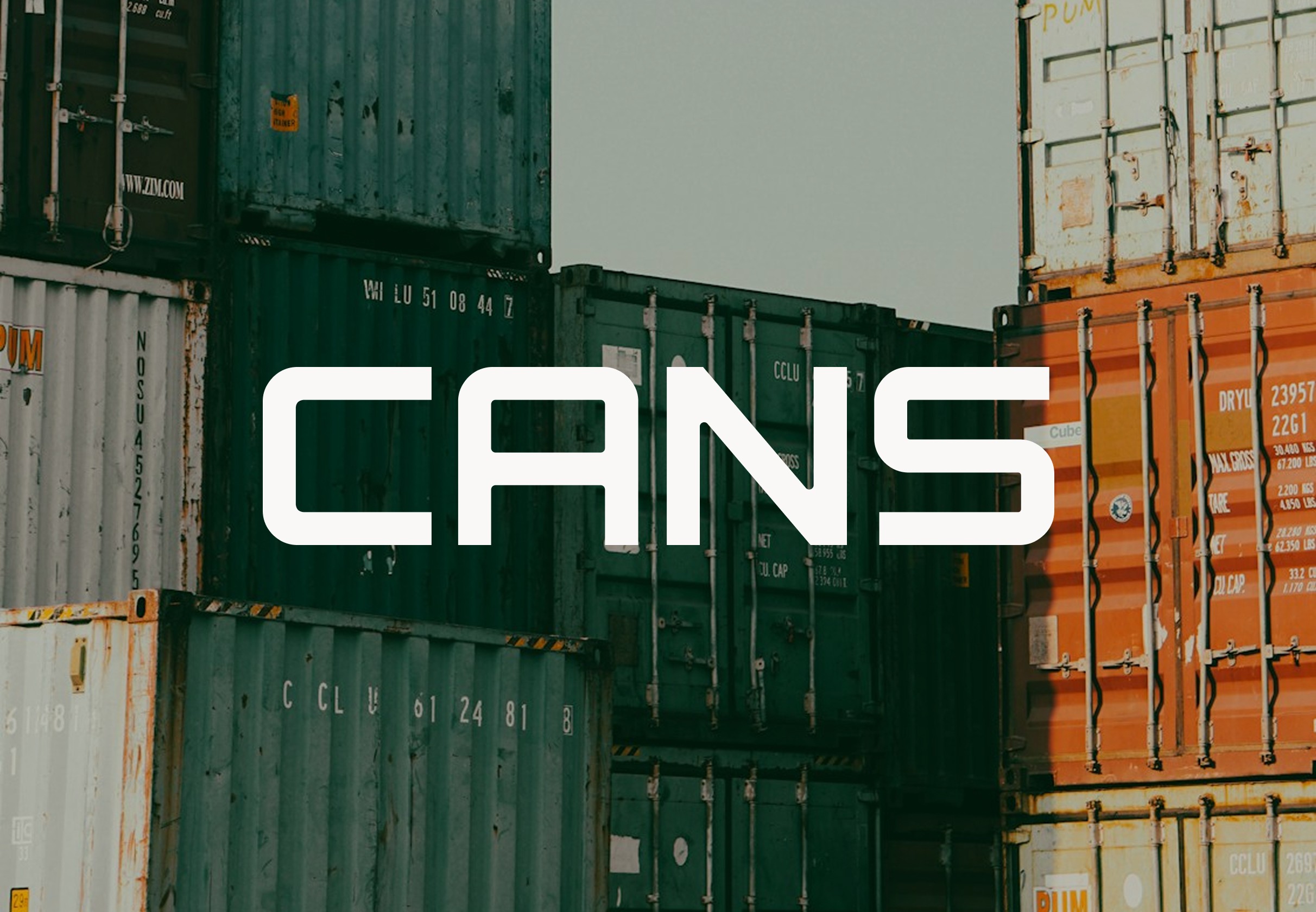
CANS — Brand Identity
Used shipping containers are impossible to assess from a photo. You don't know what they've held, what damage they've taken on, or what a structural compromise looks like until you're standing in front of one. That's the real barrier in this market — not price, not inventory. Risk.
The Situation
CANS is a used shipping container dealer. The category is fragmented, the players often untrustworthy, and buyers — contractors, developers, farmers, homeowners — are making four-to-five figure purchases almost entirely on trust. Getting burned means getting a structurally compromised unit, or one that held hazardous materials, or one that simply doesn't match what was described. There's no easy way to know until it arrives.
The Real Problem
When buyers can't evaluate the product themselves, they evaluate the seller. That shifts the entire purchase decision away from the container and onto the brand. CANS needed to look like it knew exactly what it was doing — immediately, without explanation, before a single conversation happened.
The Approach
Naming came first, and it set the tone for everything that followed. "Sea cans" is what people who actually work with shipping containers call them. Not "intermodal steel building units." Not "ISO containers." Sea cans. By compressing that into CANS, the brand earned a word that already existed in the buyer's vocabulary — and with it, the credibility of insider fluency. If you know what a sea can is, you trust someone who calls them that.
The visual identity had to carry the same weight. The color system, logotype, and logomark were designed to read as serious and established — not to dress up a low-trust category with marketing polish, but to look like a company with nothing to hide. Clean geometry. Deliberate weight. A mark that holds up on a shipping yard sign as well as it does on a business card.
The one-page website was the final piece, and arguably the most important. A buyer who lands on it has already found the brand through search or referral — they're in the consideration window. The site's job wasn't to explain what shipping containers are. It was to move a primed buyer from interest to contact as cleanly as possible. Every layout decision, every line of copy, every CTA answered one question: what does someone need to see to feel confident enough to make the call?
The Work
Full brand identity system: color palette, logotype, logomark. One-page conversion website designed to drive a single action — contact — with no friction between landing and inquiry.
The Outcome
CANS launched with a brand that does the heavy lifting before the first conversation starts. In a market where buyers arrive skeptical by default, the identity earns enough trust to get them to the contact form. That's the only outcome that matters in a single-page, high-consideration sale.